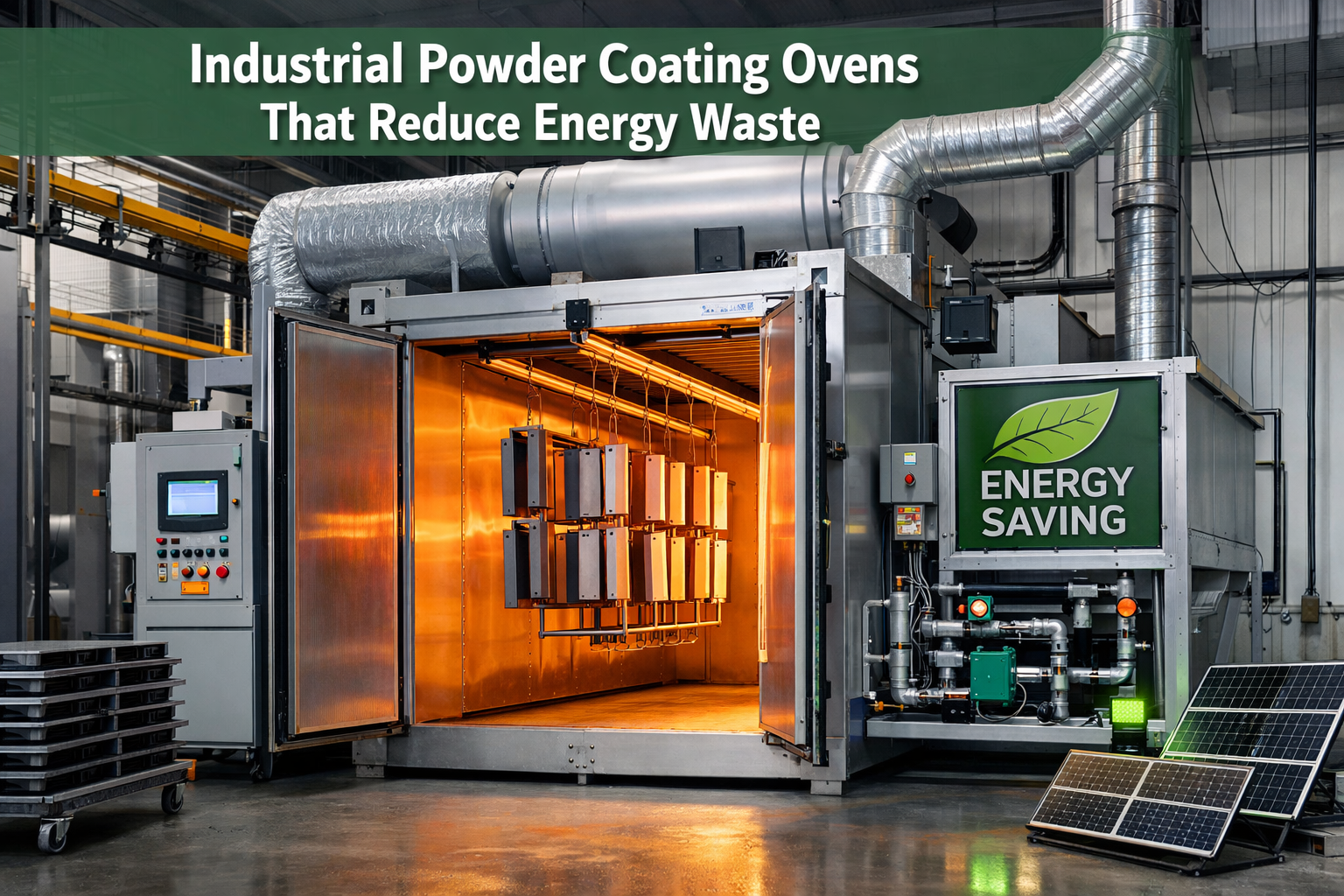
Industrial Powder Coating Ovens That Reduce Energy Waste
Rising energy costs have pushed finishing operations to look closely at where heat is being lost. Ovens sit at the center of that discussion because they consume more energy than nearly any other part of powder coating systems. Well-designed industrial powder coating ovens now focus on controlling heat instead of constantly replacing it.
Understanding How Oven Design Cuts Energy Waste
Oven design plays a larger role in energy use than fuel type alone. The layout of the chamber, placement of burners, and path of airflow all determine how efficiently heat is applied to coated parts. Poorly designed ovens allow hot air to short-cycle out of the chamber before transferring energy to the product.
Modern powder coating ovens are engineered to keep heat circulating evenly across the load. Heat paths are shaped to stay within the work zone longer, which lowers total fuel demand. When reviewing powder coating equipment for sale, design efficiency often makes a bigger difference in operating cost than initial price.
Why Proper Insulation Keeps Heat Where It Belongs
Insulation acts as the first line of defense against wasted energy. Thin or degraded insulation allows heat to bleed into the surrounding facility instead of curing parts. Over time, that loss adds up to higher fuel consumption and longer heat-up cycles. High-density insulation materials slow heat transfer and stabilize internal temperatures. Industrial powder coating oven designs that prioritize insulation maintain consistent curing without constant burner cycling. This feature is often overlooked when comparing powder coating equipment packages, yet it directly impacts monthly energy bills.
The Role of Efficient Burners in Lowering Fuel Use
Burner efficiency determines how much fuel is required to reach and hold curing temperature. Older burners often operate at fixed rates, overshooting targets and wasting heat. Newer designs modulate output based on actual demand.
Efficient burners respond quickly to load changes and reduce idle consumption. Within modern powder coating systems, burner control is tightly linked to temperature feedback. This coordination minimizes excess fuel use while keeping cure profiles consistent.
How Airflow Control Reduces Unneeded Heat Loss
Airflow inside an oven must balance circulation with containment. Too much exhaust pulls heated air out before it finishes its job. Too little movement creates uneven curing and forces longer bake times.
Advanced airflow control systems regulate volume and direction with precision. Adjustable dampers and variable-speed fans help powder coating ovens retain heat while still maintaining proper circulation. This balance reduces reheating cycles and supports uniform finishes.
What Oven Sizes Mean for Energy Efficiency Goals
Oversized ovens waste energy by heating empty space. Undersized ovens strain to maintain temperature and slow production. Selecting the right size is one of the most effective ways to control energy use. Proper sizing considers part dimensions, throughput, and future growth. An industrial powder coating oven matched to actual production needs reaches temperature faster and holds it more efficiently. Many facilities evaluating a powder coating oven for sale focus on capacity alone, overlooking how size affects long-term energy use.
Why Tight Seals Prevent Heat from Escaping
Doors, access panels, and conveyor openings are common sources of heat loss. Even small gaps allow hot air to escape continuously during operation. That loss forces burners to run longer to compensate.
High-quality seals reduce leakage and stabilize internal pressure. Modern powder coating equipment designs include reinforced door frames and durable gasketing. Over time, these features preserve heat and lower fuel demand without affecting workflow.
How Zoned Heating Saves Power on Partial Loads
Not every load fills the entire oven. Zoned heating allows operators to heat only the sections in use. Without this feature, empty zones still consume energy.
Zoned control divides the oven into independently heated sections. Powder coating systems using this approach cut energy use during smaller runs or staggered production. This flexibility is especially valuable for facilities handling varied part sizes throughout the day.
What Sensors Do to Keep Temps Accurate with less Waste
Temperature sensors guide every heating decision the oven makes. Inaccurate or poorly placed sensors cause burners to overcompensate. This leads to temperature swings and wasted energy.
Modern sensors provide precise feedback across multiple zones. Data-driven control allows powder coating ovens to maintain tight temperature ranges with minimal fuel input. Reliable sensing reduces guesswork and prevents unnecessary reheating.
Why Regular Maintenance Keeps Energy Use in Check
Even the most efficient oven loses performance without upkeep. Dirty burners, worn seals, and blocked airflow paths all increase energy demand. Small issues compound over time if left unaddressed.
Routine maintenance keeps systems operating as designed. Facilities that maintain their powder coating equipment see steadier cure cycles and lower fuel usage. Energy efficiency depends as much on condition as it does on original design.
Reliant Finishing Systems works with manufacturers to develop and deliver powder coating solutions engineered to minimize energy use while holding up to long-term industrial demands. Their team helps evaluate production needs and match them with oven designs that reduce waste. Through smart engineering and durable construction, they help facilities control energy costs without sacrificing finish quality.